


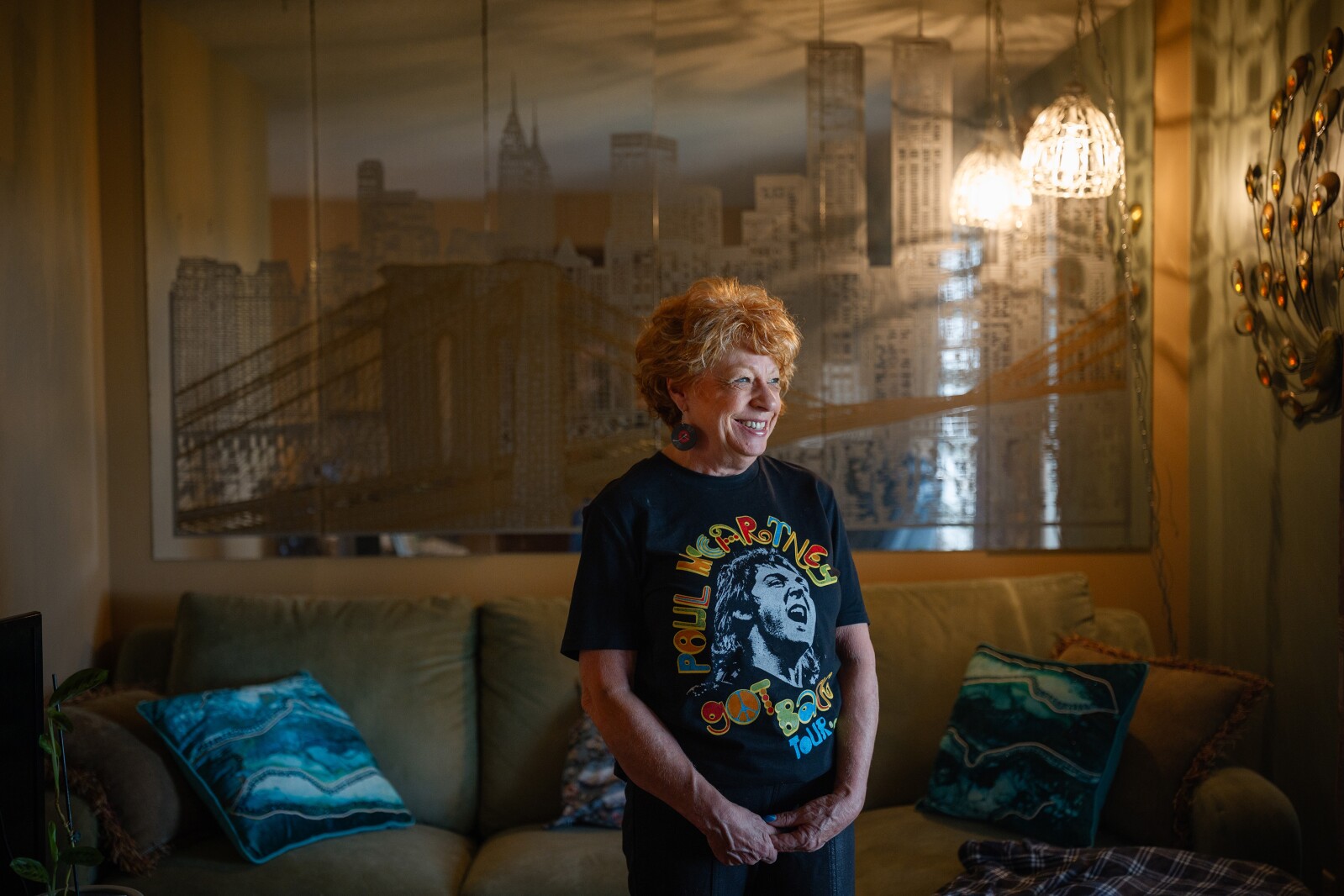
ROCHESTER — Linda VanSickle is ready for a change, following more than four decades of homeownership.
After waiting two and a half years, she’s found her next home in one of four age-restricted cooperatives in Rochester as she looks forward to embracing an active community and putting aside a variety of home maintenance concerns.
It means selling the Oronoco home she bought with her husband, Bruce, in 1984.
“It’s a nice, nice piece of property, but you know I haven’t really been able to keep up with the house (maintenance), especially when I had to go from part-time work to full-time when my husband died,” she said.
VanSickle’s 2,200-square-foot, four-bedroom home on a half acre has served her well and provided her two now-grown sons a place they could return when needed.
“They were the reasons I didn’t sell right away after Bruce died 21 years ago, because they were so sentimental about it,” VanSickle said.
However, after retiring as Charter House’s director of administrative services nearly six years ago, VanSickle said she needed to make a change, turning to Realife Cooperative of Rochester, 825 Essex Parkway NW, where a high school friend already lived and she felt welcomed.
JoMarie Morris, executive director of the
Coalition for Rochester Area Housing
, said the need for such transitions is going as the local population ages, but housing options often limit choices, especially when older residents can’t wait a year or more for the ideal circumstances to emerge.
The
Minnesota State Demographic
Center projects the county’s 65 and older population will grow from nearly 31,000 today to more than 35,000 in the next decade. During the same time, an
updated housing report by Maxfield Research and Consulting
points to the need for nearly 5,900 new senior-dedicated housing units, on top of 12,000 new general-occupancy housing options.
It means a third of the demand for new housing will come from aging residents, typically those who are 55 and older, either in retirement or looking toward retirement.
Since the first Maxfield housing study was conducted in 2014, nearly 700 age-restricted senior housing units were added throughout the county. The first study estimated a need for 2,980 new senior housing units would be needed by 2020.
When the study was updated in 2020, demand for senior housing was estimated as needing 5,410 new units by 2030.
With projected needs growing, and seniors driving roughly a third of projected new housing demand, the housing coalition created by the city of Rochester, Olmsted County, Mayo Clinic and the Rochester Area Foundation has been working to support creation of new
affordable senior housing.
It had a hand in
the county’s recent development of Trailside Apartments
at 1001 Mayowood Road SW, which offers 36 apartments designed as affordable to seniors with incomes 50% of the area median income.
It has also provided a $1.5 million loan aimed at helping Bigelow Homes keep 44 new homes priced at $350,000 or less in the developing Harvest West age-restricted neighborhood.
Other planned efforts include supporting a
76-unit affordable senior project being developed by Sherman Associates
alongside a market-rate apartment tower on an existing city-owned parking lot north of Mayo Civic Center, and a planned
75-unit senior complex alongside Mayo Clinic’s parking ramp
at what will become the western stop of Rochester’s new bus rapid transit system.
“Just between those (four projects), we’ve got 230 units coming online,” Morris said.
Private developers are also adding to future housing numbers: Forté Living, 3955 Superior Drive NW, is building its third age-restricted apartment building with 140 units; a new 95-unit age-restricted cooperative, American Cooperative, could see a development application headed to the city by the end of the year; and the Atlanta, Georgia-based Pulte Group is
proposing a 302-home retirement community in southwest Rochester.
If completed, the affordable and market-rate projects could eventually provide nearly a quarter of anticipated new active-senior housing cited in the Maxfield report, but timelines are uncertain, with projects frequently stymied by market conditions and financial constraints.

Joe Ahlquist / Post Bulletin
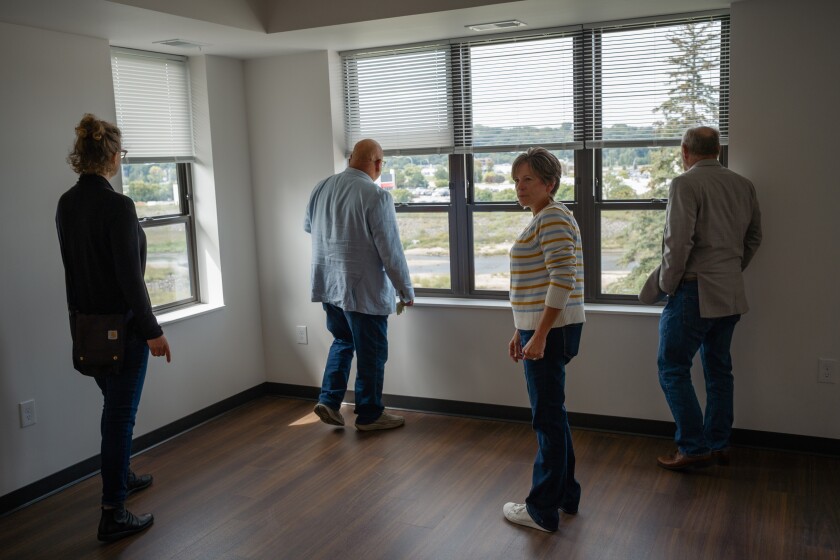
While people are moving into Trailside Apartments and Forté III is under construction, the Sherman Associates project isn’t slated for construction until next year, and the American Cooperative and Pulte projects are still in the local review phase. The Aeon project is also waiting to see whether it will receive state support for financing.
Olmsted County Housing Director Dave Dunn said the variety of housing options emerging will help address a variety of community needs, but goals go beyond the numbers.
He said as the population grows older, more aging residents, along with their families, will need to start thinking about their housing future.
“By starting to create some of these options for people, it can help to allow those conversations to happen more naturally in better times and allow for better outcomes,” he said.
With the hope of helping guide some of those conversations, the Coalition for Rochester Area Housing has contracted with Family Service Rochester and Elder Network to create a
two-year pilot program aimed at mentoring residents
looking at a housing transition based on their age.
Morris said the program could help people like VanSickle, who found herself feeling some pressure when she found out earlier this year that her two and a half years on a Realife Cooperative wait list was ending.
“Other apartments have come up, but I wanted two bedrooms,” VanSickle said of the wait.


Randy Petersen / Post Bulletin
Once she received notification of the available unit, she had roughly a month to make a $7,600 payment and put her home on the market with the hope of obtaining the remainder of the $76,000 stake she needed as a Realife tenant.
By mid-October, she had emptied her retirement account to provide the downpayment for a Dec. 1 closing on the co-op unit and was awaiting word on a purchase offer that would set the same closing date on her home.
Both came through, but she said she was worried about contingency plans at one point.
Morris said she hopes mentorship will be able to address similar situations, especially for seniors who might not be as confident in their decisions as VanSickle.
Tom Rigby, a member of the workgroup that led to the proposed mentoring program, said concerns about housing transitions go beyond the financial.
A certified public accountant, who had retired a few years before a 125 Live volunteer position transitioned into being named the nonprofit’s finance director, said finances weren’t the biggect challenge when he and his wife, Marilyn, decided to sell their Elton Hills home and rent an apartment at Forté Living.
He said the decision to move came a couple years after medication started to restrict the amount of summer yard work he could handle and the couple pondered anticipated maintenance needs in the home they had owned for 13 years.

Maya Giron / Post Bulletin
“It’s not that it’s cheaper to live at Forté. … It’s that once we sold our house we knew we would have the money to pay the rent if I wasn’t working anymore, if Social Security was reduced or whatever,” he said.
While the financial fit worked for them, Rigby said there was still a squeeze when it came to moving to an apartment.
“Even though we were only in a 1,900-square-foot house, we had to give a lot of away,” he said.
It wasn’t the first downsizing effort for the couple, who started with a 4,000-square-foot house before moves that eventually landed them in Rochester. Still, Rigby said it was more difficult than anticipated.
“It just amazed me how much we still had to get rid of when we moved to Forté,” he said of moving into a 1,100-square-foot apartment with limited storage.
Whether it’s overcoming downsizing challenges, dealing with family resistance to selling a longtime home or overcoming the feeling of being “locked in” to an existing home due to interest rate or other financial concerns, Rigby sees the housing coalition’s mentorship program playing a key role in helping others better understand their options.
“The whole concept is to build a program that works with seniors who would like to transition or think they want to transition, and help them with the pros and cons and help walk them through the process,” he said.
Mike Paradise, president of Bigelow Homes and a member of the Coalition for Rochester Area Housing, said he’s seen the need for added communication with the first sale of a home in the Harvest West development.
The buyer, who has now moved in, was concerned about the project’s unique age restriction. Designed as a 55-and-older community, she raised questions about the future financial impact.
He said the homebuyer, a widow looking to transition into a smaller home, asked whether the age restriction would affect chances for future resale, if she ended up needing to make another change in the future.
“She asked me that, and I truly can’t answer it,” Paradise said. “I really can’t. That’s something I think time will tell.”
While some buyers will like knowing they are part of a community of other seniors, he said some might not see the benefits, even as calls from older residents seeking new homes continue to hold steady.
He said changes in the overall housing market can address needs without the age-restricted limits that typically come with homes designed for needs that emerge with age, from single-floor living to the addition of features catering to people with limited mobility.
Paradise pointed out more new homes are being built without basements, and features that are often common in senior-housing development can be added to any new home, when an age-related transition is being made.


Randy Petersen / Post Bulletin
As a result, he said Bigelow Home and other builders are seeing seniors opt for locations in other developments, where they might live among young families but still have smaller homes designed for their needs.
“I say this because my wife and I are going through the same thing,” he said. “I’m 65. We have a five-bedroom house on two acres. We bought a lot in Harvest View Villas, and we will build a home probably considerably smaller than what we have now.”
The anticipated change, he said, has involved family discussions, but Paradise said it’s one they want to make before health changes require it.
Rigby said he anticipates that will be a key message that emerges with more discussion as the coalition’s senior mentorship program emerges next year.
“We are happy with our decision,” he said of moving from a house to a senior apartment. “We know it’s not for everybody but, I think there’s certainly a need for more information to get out, more information to help people with decision making, because it’s not good for the family when parents get too old and they have to move them out.”
link