


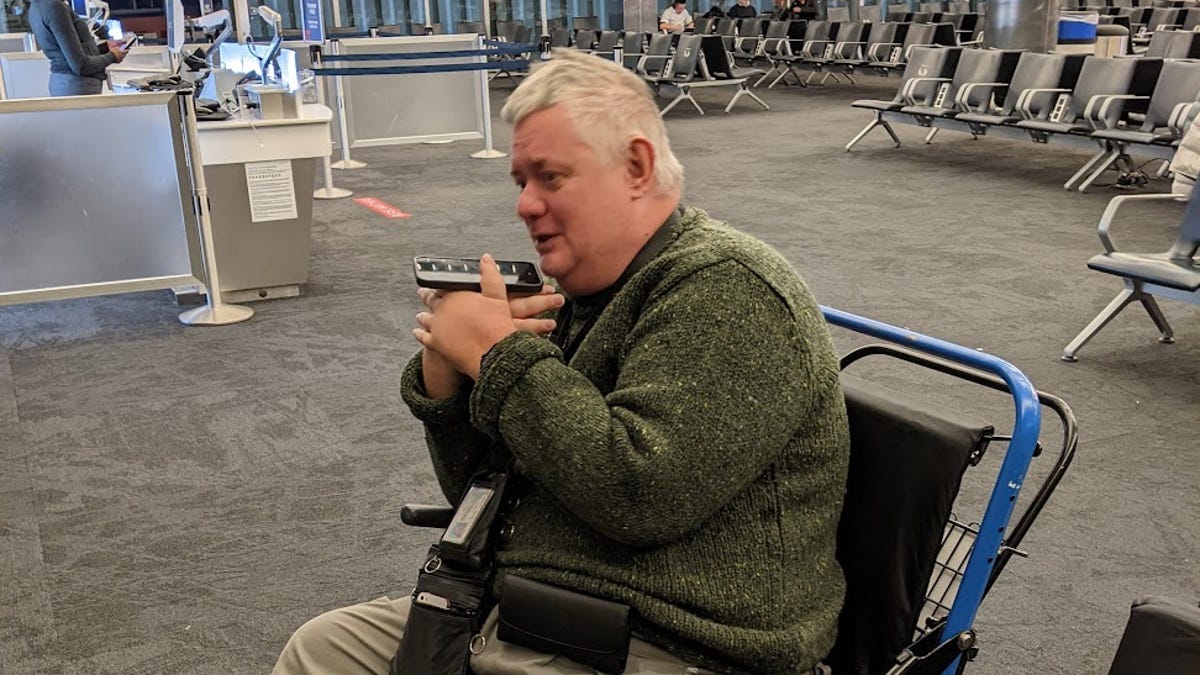
Airport and airline staff were unable to provide a suitable temporary wheelchair, leaving the man without his independence.

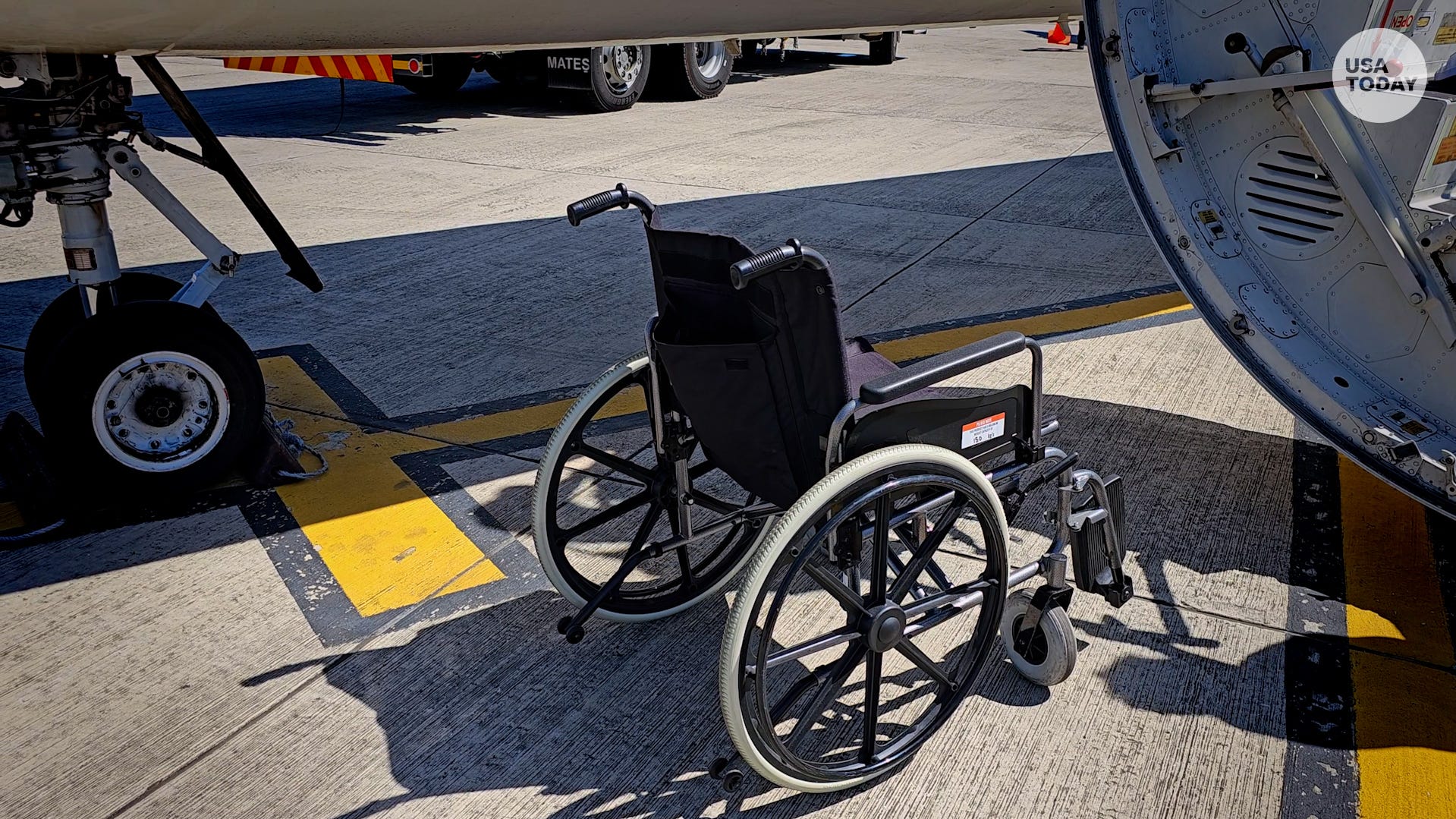


Air travel accessibility issues for passengers with disabilities
Airlines mishandle thousands of mobility devices yearly, raising concerns about accessibility in air travel.
- A man who relies on a wheelchair had his personal device left behind by an airline during a multi-leg flight.
- The traveler, Zoltan Borsodi, said airport staff lacked a contingency plan for his missing medical device.
- SAS Scandinavian Airlines acknowledged the incident and stated they did not meet their own service standards.
Zoltan Borsodi knew there’d be issues with his flight.
He was flying home to Raleigh, North Carolina, from Budapest on Jan. 12, via Copenhagen and Boston, on SAS Scandinavian Airlines and Delta Air Lines.
Borsodi, 56, is retired and relies on a wheelchair because he has Charcot-Marie-Tooth disease (CMT), which impairs his mobility.
He told USA TODAY that when he arrived in Copenhagen, his personal wheelchair was not at the gate. It immediately raised red flags for him, but he figured it could have been because he had a tight connection for his flight to Boston. When he arrived in Boston, his suspicion had been correct.
Borsodi’s wheelchair was still in Copenhagen, according to the Apple AirTag he used to track it.
“When I asked at Boston Airport what the contingency plan is for such incidents when somebody’s personal medical device is missing, they couldn’t provide me one,” he said in a phone interview. “This is the fifth time it happened to me – in several airports – and the result was always the same.”
Borsodi said that in Boston, he was accommodated with an airport wheelchair that required a pusher.
“I completely lost my independence,” he said. As someone who travels frequently, Borsodi said he knows how to get around on his own with the right equipment, but the airport wheelchair was not sufficient. “It is not catered to my needs; it’s something that’s really uncomfortable.”
The employees at Boston Logan International Airport were unable to provide further assistance. They assured him they called ahead to Raleigh-Durham International Airport to ensure a more suitable wheelchair would be available upon his arrival. When Borsodi got back to North Carolina, however, the airport employees there were unaware of the issue.
Representatives from Boston Logan directed USA TODAY to reach out to the airline (SAS) for comment. In a statement, SAS acknowledged the incident.
“SAS strives to make the travel experience for wheelchair users as seamless as possible. We did not meet our own standards for service in Mr. Borsodi’s case and we will work to improve training. We have reached out to Mr. Borsodi to rectify our missteps,” the statement said.
Borsodi said that the airline reimbursed his checked baggage fees but did not provide further assistance. They offered to reimburse him for a temporary wheelchair rental, but Borsodi said he had an old wheelchair in his garage that he used for two days until his regular device was returned to him via FedEx.
“We had to pull a 20-something-year-old scrap wheelchair from our garage, which was barely usable. We put it out years ago in the garage. With my wife’s help, that’s what I was able to use in the house. I couldn’t leave the house,” he said.
Borsodi said he hopes airlines and airports will better train their employees in the future and develop a standard action plan for when mobility devices are mishandled.
“I can count very, very few occasions that I’ve met staff who know what to do and how to do it,” he said. “A person who is wheelchair-bound is immobile without their proper equipment, and I was literally immobile.”
How often do airlines damage or mishandle mobility devices?
According to the Department of Transportation, U.S. airlines collectively transported 899,385 wheelchairs and scooters in 2024. Of those, 11,357 (1.26%) were reportedly damaged or destroyed in transit. It’s a very slight improvement over 2023, when 1.38% of the mobility devices airlines transported were mishandled.
Those numbers are based solely on consumer complaints, which is why it’s important for disabled travelers to notify airlines and the DOT when something goes wrong. They also don’t include incidents involving foreign airlines, so it’s unlikely that Borsodi’s issue will appear in the data.
Zach Wichter is a travel reporter and writes the Cruising Altitude column for USA TODAY. He is based in New York and you can reach him at zwichter@usatoday.com.
link