

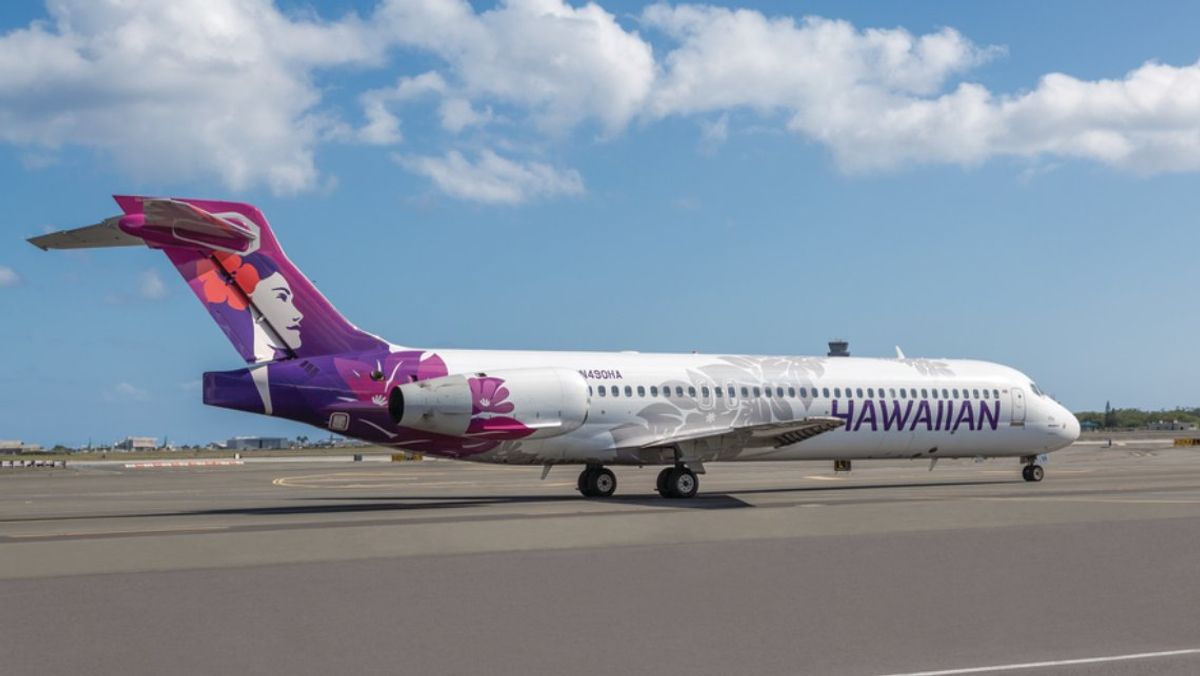
Alaska Air Group’s decision this spring to restore full Hawaiian Airlines content to the GDSs and to do away with Hawaiian’s GDS surcharge is paying dividends, according to chief commercial officer Andrew Harrison.
And Sabre, which Harrison said does the lion’s share of Hawaiian’s GDS business, said Hawaiian’s results show the value of Sabre and other content aggregators.
“We think this is the most efficient, effective and scaled way of distributing travel,” Sabre chief commercial officer Roshan Mendis said during a joint interview with Harrison.
Some airlines are pushing for travel agency adoption of New Distribution Capability technology and its merchandising capability, though travel agencies have been hesitant to adopt it due to implementation costs and concerns about servicing.
Sabre and other GDSs were slower to develop NDC capabilities than airlines wanted, though they’ve stepped up their technology stacks in the past couple of years.
Alaska Air Group, which acquired Hawaiian last year, did away with Hawaiian’s $7 GDS surcharge in May and restored Hawaii interisland flights to the legacy GDS, a move that brought Hawaiian’s distribution strategy in line with Alaska Airlines’. For the previous three years, Hawaiian only sold interisland inventory via direct or NDC-enabled distribution channels, including Sabre NDC for the final nine months of that period.
Harrison said Sabre “saw meaningful positive share shifts” after returning Hawaiian fares to Sabre’s legacy system — a 38% booking increase in the GDS from May through July and a $37 million increase in revenue from Sabre bookings.
Harrison acknowledged that some of those GDS sales moved from other channels rather than being net new bookings, but he did not provide specifics.
Airline distribution consultant Cory Garner, who is an NDC advocate, said that considering Hawaiian’s largely leisure customer base and that the large majority of NDC bookings are transacted by online travel agencies, much of that additional Sabre revenue likely was a shift by OTAs from direct-connect bookings to Sabre.
Harrison said Hawaiian saw its biggest market share improvement in its interisland network. The airline is the largest player in the Hawaii-to-Hawaii market, competing primarily against Southwest but also Southern Airways Express’ prop-plane service. In April, as part of a broader network adjustment, Southwest implemented a 14% year-over-year cutback in its interisland service, which could have been a factor in Hawaiian’s increased market share.
Mendis emphasized that Hawaiian was the third North American carrier since spring 2024 to roll back barriers it had imposed on GDS bookings. Last year, American Airlines restored all but basic economy content to the GDSs, giving up on an aggressive strategy to drive more bookings to direct and NDC channels.
Air Canada also dropped its NDC surcharge in 2024 on most bookings after a yearlong implementation, but it kept the surcharge in place for domestic basic economy fares.
American and Air Canada have nevertheless continued their NDC efforts, including the deployment of continuous fares, which can’t be supported by legacy GDS technology.
Sabre has been touting the value of SabreMosaic, an AI-powered retailing platform introduced in May 2024 that features content from more than 400 airlines, including 39 NDC connections.
Airlines that impose surcharges or remove content may penalize themselves by making themselves less attractive in that marketplace, Mendis said. Garner, however, said that major airlines, including United and American, will continue to utilize multifaceted distribution strategies.